
Basement Floor Epoxy in Evansville
Basement slabs are a different job than garage slabs. The coating is the easy part. Moisture testing decides whether it lasts.
Get a Free QuoteThe problem: moisture you can't always see
A basement slab sits in contact with the ground, and moisture can move up through concrete as vapor. When it gets trapped under a coating, it can push the coating off the floor in bubbles, blisters or white, chalky patches. That is the most common reason basement coatings fail, and it usually traces back to a skipped test.
The Evansville climate makes this worth taking seriously. The area is humid subtropical, with a muggy period that runs from about May 10 to October 13. July averages 29.3 muggy days, and dewpoints reached the mid-70s to low-80s in late July 2025. The area also gets 47.91 inches of precipitation in a normal year. Humid air in a cool basement can condense on the slab, and wet seasons can raise moisture under it. Low-lying parts of the Tri-State also know what high water looks like: the Ohio River crested just under 48 feet at Evansville in April 2025, its seventh-highest on record.
The solution: test first, then pick the right system
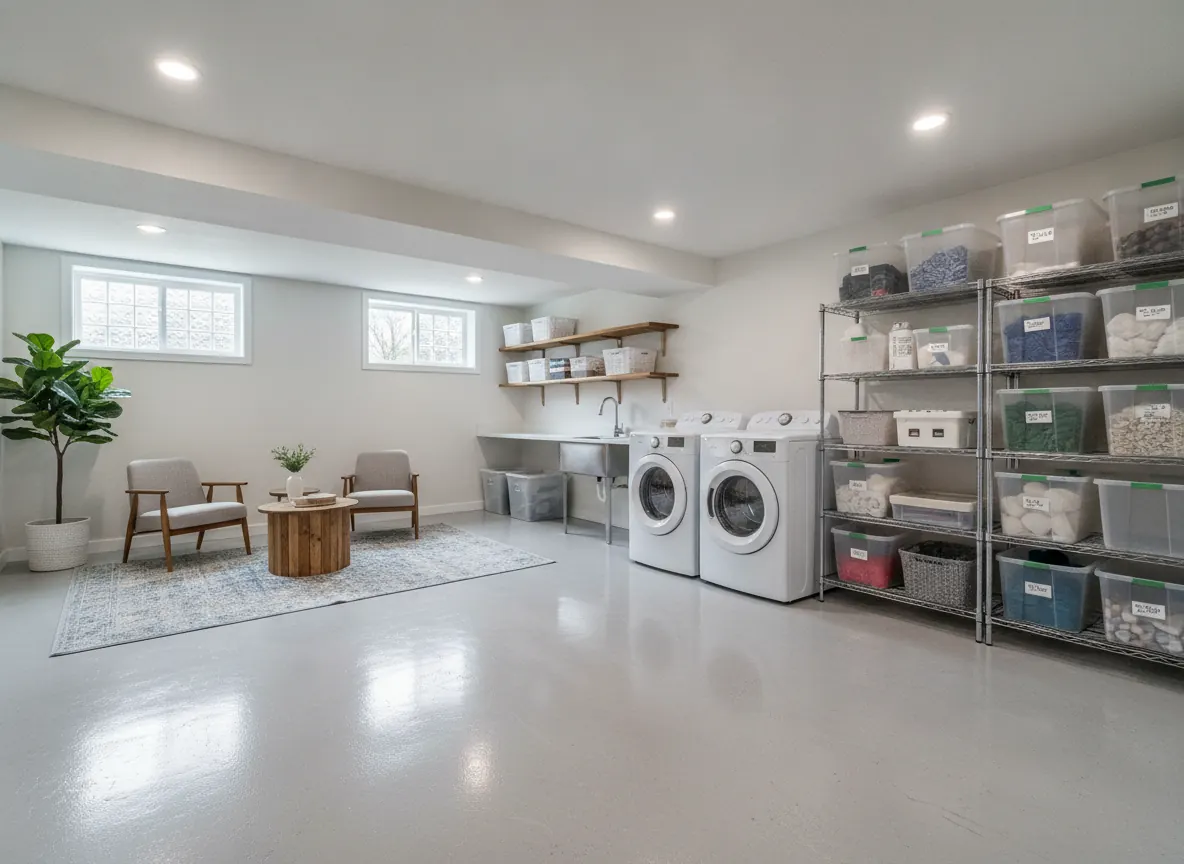
A good basement floor starts with a moisture assessment, not a color chart. Depending on what testing shows, the installer will recommend one of these paths:
- Dry slab: a standard ground-and-coated system in solid color, flake or metallic.
- Elevated moisture: a moisture-mitigating primer or barrier under the coating, typically about +$1 per sq ft.
- Active water or flooding: fix the water problem first (drainage, gutters, sump, cracks). No coating is a waterproofing system.
Once the slab is ready, the look is up to you. A solid color or light flake blend brightens a utility space. Metallic epoxy suits a finished rec room or bar. Coated basement floors are easy to mop, and they don't hold dust like bare concrete.
How a basement floor epoxy job works
The core steps match our standard process, with extra attention up front:
Moisture testing
The installer tests the slab for moisture with the method they trust, such as a meter reading, a taped plastic-sheet test or a calcium chloride test. Ask which one they use and what the results mean.
Clear and protect
Furniture is moved, walls and fixtures are protected, and the work area is set up with ventilation in mind.
Grind and repair
The floor is diamond ground, and cracks and pits are filled. Grinding is especially important if the floor has old paint or sealer. See concrete prep and crack repair.
Moisture primer if needed
If testing calls for it, a moisture-mitigating primer goes down first.
Coating system
Base coat, optional flake or metallic layer, and a clear topcoat.
Ventilated cure
Keep the space ventilated and follow the product directions on cure time before moving furniture back.
Running a dehumidifier during the humid months helps any finished basement, coated or not.
Typical basement floor epoxy cost
Typical installed ranges, 2025–2026 (estimates only): a basement floor of about 1,000 sq ft typically runs $5,000–$8,000. A moisture barrier adds about $1 per sq ft, crack and chip patching runs $25–$250, and resurfacing a badly damaged slab is about $3–$5 per sq ft. Metallic finishes cost more than solid colors. See the full cost guide, and book a free quote so moisture can be checked on site.
Basement Floor Epoxy FAQ
Can you epoxy a basement floor that gets damp?
Often yes, but only after the cause is understood. Surface dampness from summer humidity can be managed with a dehumidifier and a moisture-mitigating primer. Water that actually seeps in or pools needs a drainage or crack fix first, because no floor coating is a waterproofing system. A moisture test on site tells the installer which situation you have.
How is a basement slab tested for moisture?
Common methods include a concrete moisture meter, taping a square of plastic sheet to the floor for a day or two to see if moisture collects underneath, and calcium chloride test kits that measure vapor emission. Installers have their own preferences. Ask which test they use, what reading they consider safe, and what they recommend if it fails.
Do I need a moisture barrier under basement epoxy?
Only if testing shows elevated moisture. When it does, a moisture-mitigating primer under the coating helps prevent bubbling and peeling. As a typical estimate, it adds about $1 per square foot. It is cheap insurance compared with redoing a failed floor, but it is not needed on every slab.
How much does it cost to epoxy a basement floor?
Using typical 2025–2026 installed ranges, a basement floor around 1,000 square feet typically runs about $5,000 to $8,000. Moisture barriers, crack repair and decorative metallic finishes add to that. These numbers are estimates. The real price depends on the size, slab condition and system you choose, confirmed during an on-site quote.
Is epoxy safe to install in a basement?
Basements have limited airflow, so ventilation matters. Installers typically use fans and open windows or doors, and some products have lower odor than others. Follow the product directions, keep people and pets out of the area during application and curing, and ask the installer what ventilation plan they will use.
Ready for a garage floor that cleans up in minutes?
Free, no-pressure quotes across Evansville, Newburgh, Henderson and the Tri-State.