
Concrete Floor Prep & Crack Repair
The coating gets the attention, but prep decides how long it lasts. Here is what happens to the slab before any color goes down, and why it matters.
Get a Free QuoteThe problem: most coating failures start under the coating
When a garage floor peels in sheets, lifts under tires or bubbles near the door, the cause is rarely the color coat. It is almost always the bond to the concrete. A coating sticks only as well as the surface under it. Old sealers, oil, dust and a smooth, troweled top layer all get in the way.
Older slabs have more to deal with. Evansville's median home was built in 1961, so many garage floors have decades of oil, old paint and patched cracks. Winter makes it harder. Indiana pavements see a large number of freezing and thawing cycles each year, and county crews spread thousands of tons of salt. Vanderburgh County typically uses 7,000 to 11,000 tons a winter, and Henderson County has used 2,000+ tons in one winter. Salt water that soaks into bare concrete can lead to surface scaling and pitting, and every one of those flaws needs attention before coating.
Diamond grinding vs acid etching
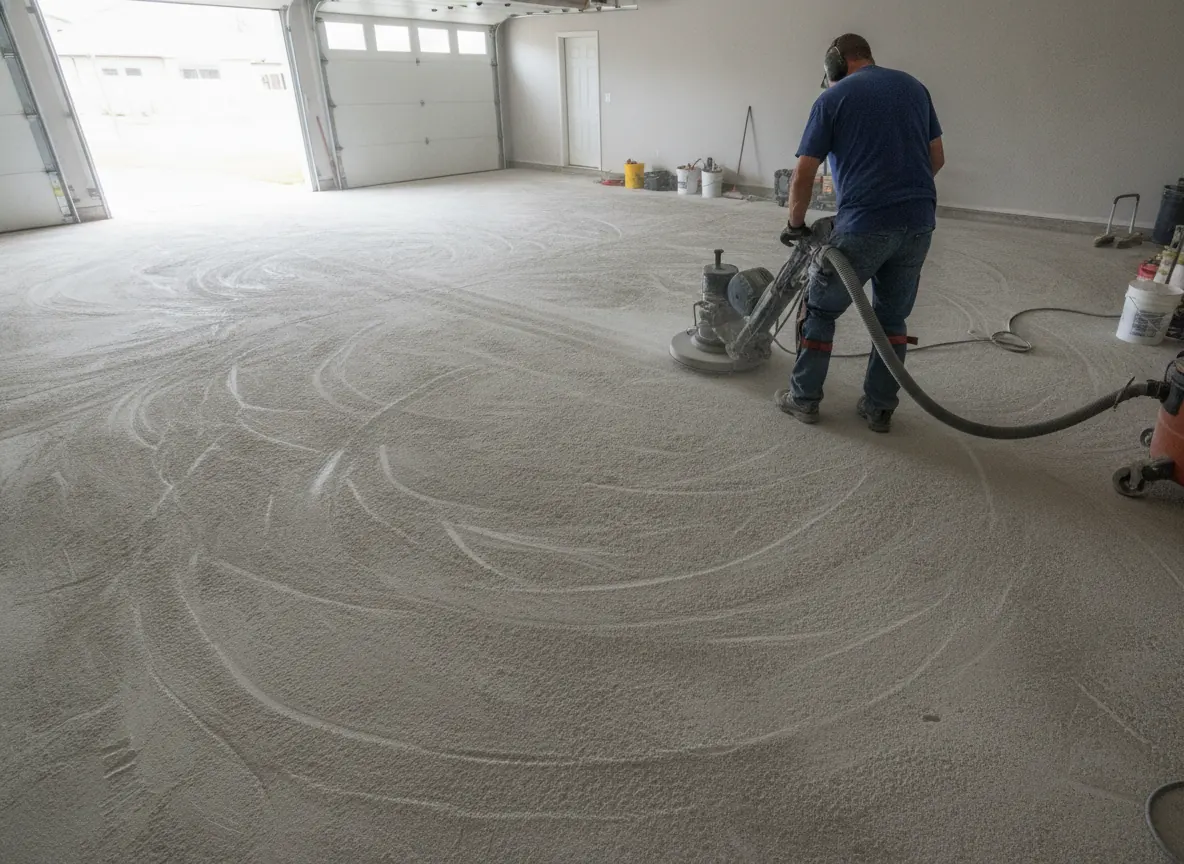
Coatings need a rough, open surface profile to grip. There are two common ways to get it:
Diamond grinding uses a machine with rotating diamond-segment heads, usually connected to a dust-collecting vacuum. It removes the weak top layer, old sealers, coatings and contamination, and leaves a consistent profile across the whole floor. It is the standard prep for professional systems.
Acid etching uses a diluted acid wash, common in DIY kits. It is cheaper and needs no machine, but it cannot remove sealers, paint or oil. It also etches unevenly and leaves residue that must be fully rinsed and dried. On older or contaminated slabs it often leaves a weak bond.
We go deeper in do you have to grind a garage floor before epoxy? and in DIY epoxy kit vs professional install.
Crack, pit and joint repair
Coatings follow the surface they are applied to. Left alone, cracks and pits show through the finished floor and can let moisture get under the coating. Typical repairs include:
- Hairline and small cracks: ground open (chased) and filled with an epoxy or polyurea crack filler, then ground flush.
- Spalls and pitting: filled with a repair mortar or patch compound, often where salt and freeze-thaw have scaled the surface near the door.
- Control joints: either filled and coated over, or kept open so the slab can move, depending on the installer's approach.
- Badly damaged slabs: resurfaced with an overlay before coating.
One honest caveat: a coating does not fix a slab that is still moving. Cracks from settling or heaving can come back through any coating. A good installer will tell you when a crack is structural and needs a different fix first.
The prep sequence
Prep is part of every coating job we connect homeowners with, whether that is flake, polyaspartic or metallic. The full job is on our process page.
Inspect
Check for old coatings, oil saturation, moisture, cracks, spalling and slab movement.
Degrease and clean
Heavy oil spots are cleaned so they don't keep wicking up into the new coating.
Diamond grind
Grind the whole floor with dust collection to a consistent profile, with edges done by hand grinder.
Repair
Chase and fill cracks, patch spalls, and resurface if needed. Grind repairs flush.
Vacuum and verify
Vacuum thoroughly and confirm the slab is clean and dry before the first coat.
Typical prep and repair costs
Typical installed ranges, 2025–2026 (estimates only): grinding is normally included in a professional coating price. Crack and chip patching typically runs $25–$250, resurfacing a badly damaged slab runs about $3–$5 per sq ft, and a moisture barrier adds about $1 per sq ft. See how prep fits into the total on our garage floor epoxy cost guide, and ask for a free quote so your slab can be assessed in person.
Concrete Prep & Crack Repair FAQ
Do you have to grind a garage floor before epoxy?
For a professional-grade coating, yes. Diamond grinding removes the weak top layer, sealers and contamination and leaves a consistent profile the coating can grip. Acid etching is a DIY alternative, but it cannot remove sealers, paint or oil and often leaves a weaker bond. Most coating failures trace back to prep, not the coating itself.
Does garage floor epoxy fill cracks?
Not on its own. A coating is thin and follows the surface, so cracks usually show through and can let moisture underneath. Cracks should be opened up, filled with a crack filler or patch material and ground flush before coating. Cracks from a slab that is still moving may come back through any coating.
How much does crack repair add to the price?
As a typical 2025–2026 estimate, crack and chip patching runs about $25 to $250, depending on how much repair the floor needs. Resurfacing a badly damaged slab runs about $3 to $5 per square foot. The installer will measure and price repairs during the on-site visit, so the quote reflects your actual floor.
Is diamond grinding dusty?
Grinders are usually connected to an industrial vacuum that captures most of the dust as the machine works. Some dust still escapes at edges and corners, so installers typically ask you to clear the garage and cover anything you leave behind. Ask your installer what dust control they use and how they clean up afterward.
Can a peeling DIY coating be fixed?
Usually the failing coating has to come off. Grinding removes the loose material and any remaining old product so the new system bonds to sound concrete. Coating over a peeling layer just bonds the new floor to something that is already letting go. Removal adds time, so mention any existing coating when you request a quote.
Ready for a garage floor that cleans up in minutes?
Free, no-pressure quotes across Evansville, Newburgh, Henderson and the Tri-State.