
Once you decide to coat your garage floor, the next question is what you want it to look like. Most residential garage floors in the Tri-State end up as one of three finishes: a flake (chip) system, a metallic epoxy, or a solid-color epoxy. They can all be durable when the floor is prepped well, but they differ a lot in how they look day to day, how much dirt they show, how they feel underfoot when wet, and what they typically cost.
What “garage floor epoxy and flakes” actually means
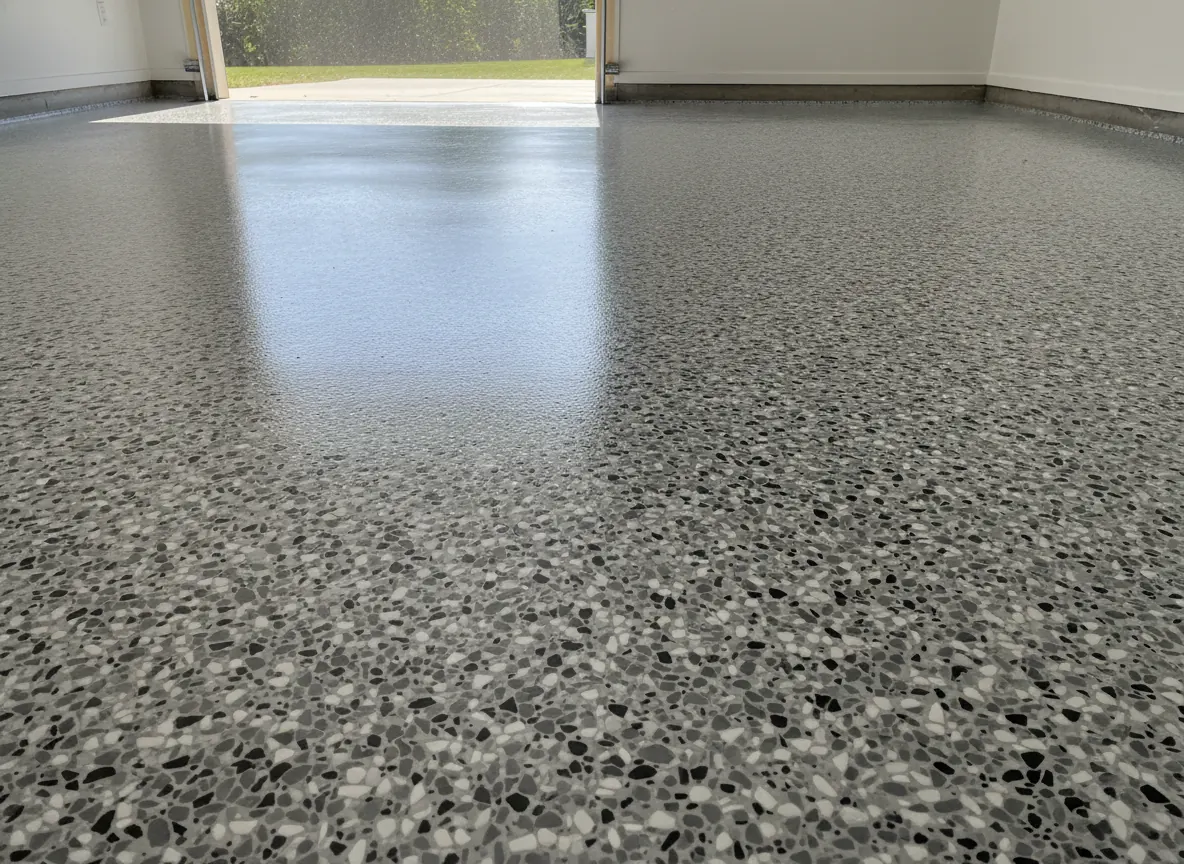
A flake floor is a layered system. The installer applies a colored base coat, then broadcasts (throws) colored vinyl chips into the wet coating, often to full coverage so no base color shows. After it cures, loose chips are scraped and vacuumed off, and one or more clear topcoats seal everything in. The base and topcoat may be epoxy, polyaspartic, or a combination, depending on the system.
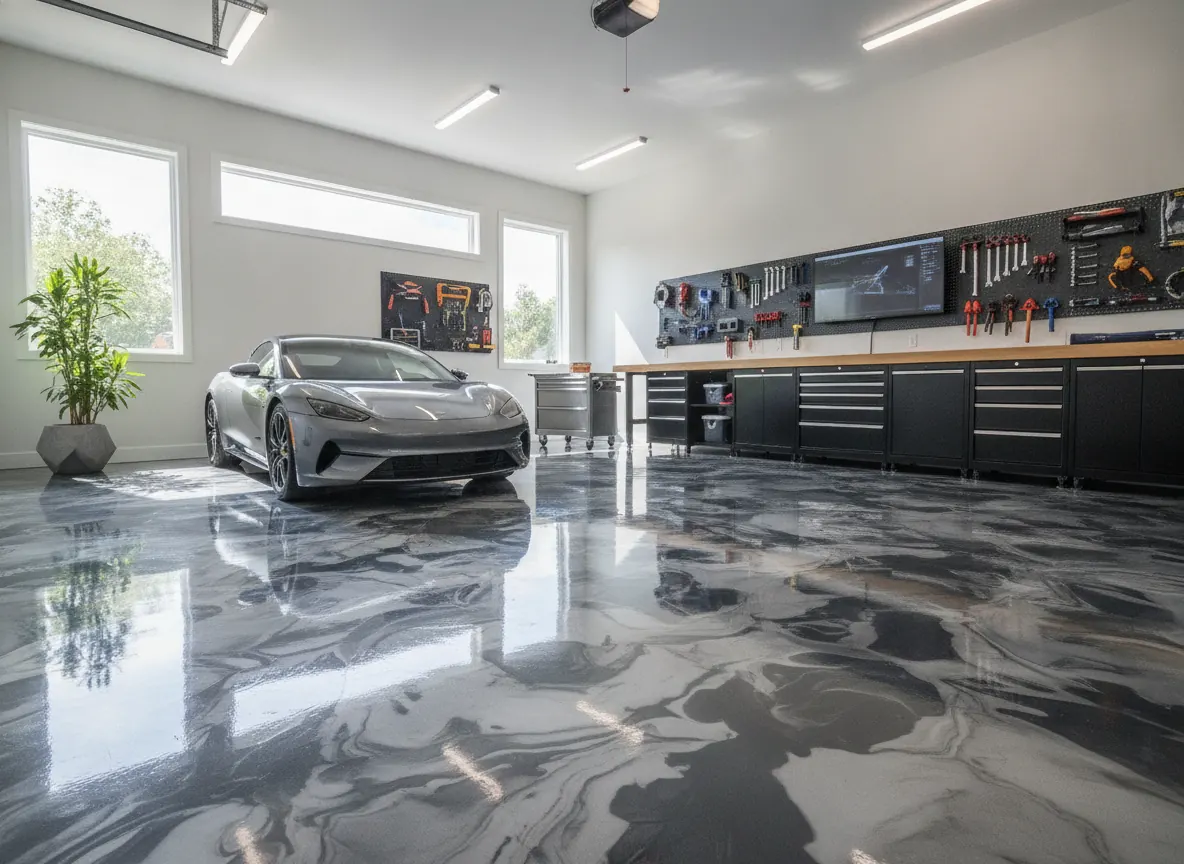
A solid-color floor skips the chips: a primer or base coat and a pigmented topcoat in one color, sometimes with a clear coat over it. A metallic floor uses epoxy loaded with metallic pigments that the installer manipulates while it is wet, creating swirls, depth and a marbled or pearl-like look. No two metallic floors look the same.
Flake floors: the practical favorite
Looks: a speckled, granite-like finish available in many color blends, from grays and tans to bolder mixes. It reads as clean and finished without being flashy.
Hiding dirt: this is where flake shines. The multicolor pattern camouflages dust, light tire marks, small scuffs and the grit that comes in on boots. For a working garage, that alone is why many homeowners choose it.
Slip: the chip edges leave a subtle texture under the topcoat, so flake floors usually have more grip than smooth finishes. Anti-slip grit can be added to the topcoat for more.
Best for: everyday parking garages, families, and anyone who wants a floor that looks good with little upkeep. Learn more on our flake garage floor coating page.
Metallic epoxy: the showpiece
Looks: deep, glossy and three-dimensional, with swirls and movement that look closer to polished stone or liquid metal than to a garage floor. It is popular for showroom garages, home gyms, basements and finished spaces.
Hiding dirt: fair at best. Variation in the pattern hides some marks, but the high gloss shows dust, water spots and fine scratches more than flake does, especially in darker colors.
Slip: usually the smoothest and glossiest finish, so it is the most slippery when wet. If it is going into a garage where cars bring in snowmelt, ask about an anti-slip additive in the topcoat.
Installation: metallic work is more art than routine. Results depend heavily on the installer's experience, which is part of why it costs more. See our metallic epoxy floors page.
Solid-color epoxy: simple and budget-friendly
Looks: clean and uniform, often in gray, tan or white. It gives a bright, tidy look and reflects light well, which can make a dim garage feel bigger.
Hiding dirt: the weakest of the three. A single flat color shows tire marks, dust, footprints and scratches. Lighter colors show dirt; darker colors show dust and scratches.
Slip: smooth when wet unless texture is added. An anti-slip grit in the topcoat is a common upgrade.
Best for: workshops and storage spaces where function matters more than looks, or homeowners on a tighter budget. It is also a common base for safety striping on shop floors.
Typical cost: flake vs metallic vs solid
These are typical installed ranges for 2025–2026. They are estimates only; your real price depends on slab condition, repairs, moisture and the system chosen, and comes from an on-site look.
| System | Per sq ft | 1-car (~250 sq ft) | 2-car (~500 sq ft) | 3-car (~750 sq ft) |
|---|---|---|---|---|
| Solid-color epoxy | $5–$8 | $1,250–$2,000 | $2,500–$4,000 | $3,750–$6,000 |
| Flake epoxy system | $5.50–$10 | $1,400–$2,500 | $2,750–$5,000 | $4,100–$7,500 |
| Polyaspartic flake system | $6–$12 | $1,500–$3,000 | $3,000–$6,000 | $4,500–$9,000 |
| Metallic epoxy | $10–$16 | $2,500–$4,000 | $5,000–$8,000 | $7,500–$12,000 |
Add-ons can change the total: crack and chip patching typically runs $25–$250, a moisture barrier about +$1 per square foot, and resurfacing a badly damaged slab $3–$5 per square foot. For the full breakdown, see our garage floor epoxy cost guide.
Side-by-side comparison
| Flake | Metallic | Solid color | |
|---|---|---|---|
| Look | Speckled, granite-like | Glossy swirls, high-end | Clean, uniform |
| Hides dirt and scuffs | Best | Fair | Least |
| Grip when wet (no additive) | Best | Least | Low |
| Typical cost per sq ft | $5.50–$12 | $10–$16 | $5–$8 |
| Best fit | Everyday garages | Show garages, basements | Shops, budget jobs |
Epoxy or polyaspartic under the flakes?
Flake floors can be built with epoxy, polyaspartic, or a mix (for example, an epoxy base with a polyaspartic topcoat). Polyaspartic cures faster and is often promoted for UV stability, so it may suit a garage with a lot of sunlight through an open door. It also typically costs more, as the table shows. Typical lifespans are 10–20 years for professional solid epoxy and 10–20+ years for polyaspartic, compared with 3–5 years for water-based DIY epoxy. Read epoxy vs polyaspartic garage floors and how long garage floor epoxy lasts for more.
How to choose for an Evansville garage
- You park in it every day, all winter: flake. It hides salt residue and grit, and the texture helps with snowmelt. Our post on whether epoxy garage floors are slippery explains why.
- You want a wow factor in a show garage, gym or finished basement: metallic, ideally with an anti-slip topcoat if it will see water.
- You want a clean, functional floor for the lowest typical price: solid color.
- You want the garage back fast: ask about a polyaspartic flake system.
Whatever look you pick, the prep underneath decides how long it lasts. Ask any installer how they grind, repair cracks and test for moisture, and ask for the written warranty terms so you know exactly what is covered.
Ready to compare options for your own floor? Get a free quote and ask the installer to bring chip and color samples so you can see them in your garage's light.