
The glossy, showroom look is the reason a lot of people want a coated garage floor. It is also the reason many of them hesitate. A smooth, high-gloss surface can be slippery, especially with water, snowmelt or oil on it. So are epoxy garage floors slippery? A plain, smooth, glossy coating can be slick when wet. A properly specified garage floor, with texture or an anti-slip additive in the topcoat, usually is not a problem for everyday use.
Here is what actually makes a coated floor slippery, why it matters more in the Tri-State than in drier places, and what you can ask your installer for.
Why a coated floor can feel slippery
Bare concrete has a rough, porous surface that gives shoes and tires something to grip. A coating fills those pores and creates a smooth film. When that film is dry and clean, most people find it walks about the same as a finished indoor floor. Add a thin layer of water, slush or oil and the smooth film lets it sit on top instead of soaking in, and that thin layer is what makes it slick.
Gloss level and texture matter more than the chemistry. A smooth solid-color epoxy, a metallic epoxy and a smooth polyaspartic topcoat can all be slippery when wet if no texture was added. A full-broadcast flake floor has more built-in texture.
Wet floors and snowmelt: the Evansville problem
Water is the main slip hazard on any coated garage floor, and our area has plenty of it. NWS normals put Evansville's annual precipitation at 47.91 inches, so cars pull in wet much of the year. Winter adds snow (about 10.8 inches a season on average), slush and road brine. The city had 6,000 tons of salt and 12 routes ready for the January 2026 storm, and crews pre-treat with brine, so whatever is on the road ends up dripping off your wheel wells.
That salty slush puddles under the car and gets tracked to the door into the house, which is exactly where people slip. Salt is also hard on floors in general, which we cover in road salt and garage floor coatings. In summer, the muggy stretch from about May to mid-October can bring condensation on a cool slab, which can leave a damp film on any smooth floor.
Anti-slip additives: how they work
The most common fix is an anti-slip additive: a fine grit mixed into or broadcast onto the topcoat. It leaves a slightly sandpaper-like texture that gives shoe soles and tires more to grip. Installers can adjust how much is used, so you can choose between a light texture that is easy to clean and a more aggressive one for areas that stay wet.
A few practical points:
- It goes in the topcoat. Grit added to the final clear coat is what your feet touch. Ask where it goes in the system.
- More texture means more grip but harder cleaning. A heavy texture holds dirt and is tougher on a mop. Many homeowners pick a moderate level.
- You can zone it. Some installers add more texture near the entry door, steps and the front of the parking spaces where water drips.
- It slightly changes the look. A textured topcoat is usually a little less glossy. Most people do not mind once they see it in person.
Exact additive types and amounts vary by manufacturer, so ask your installer what they use and follow the product guidance for mixing ratios.
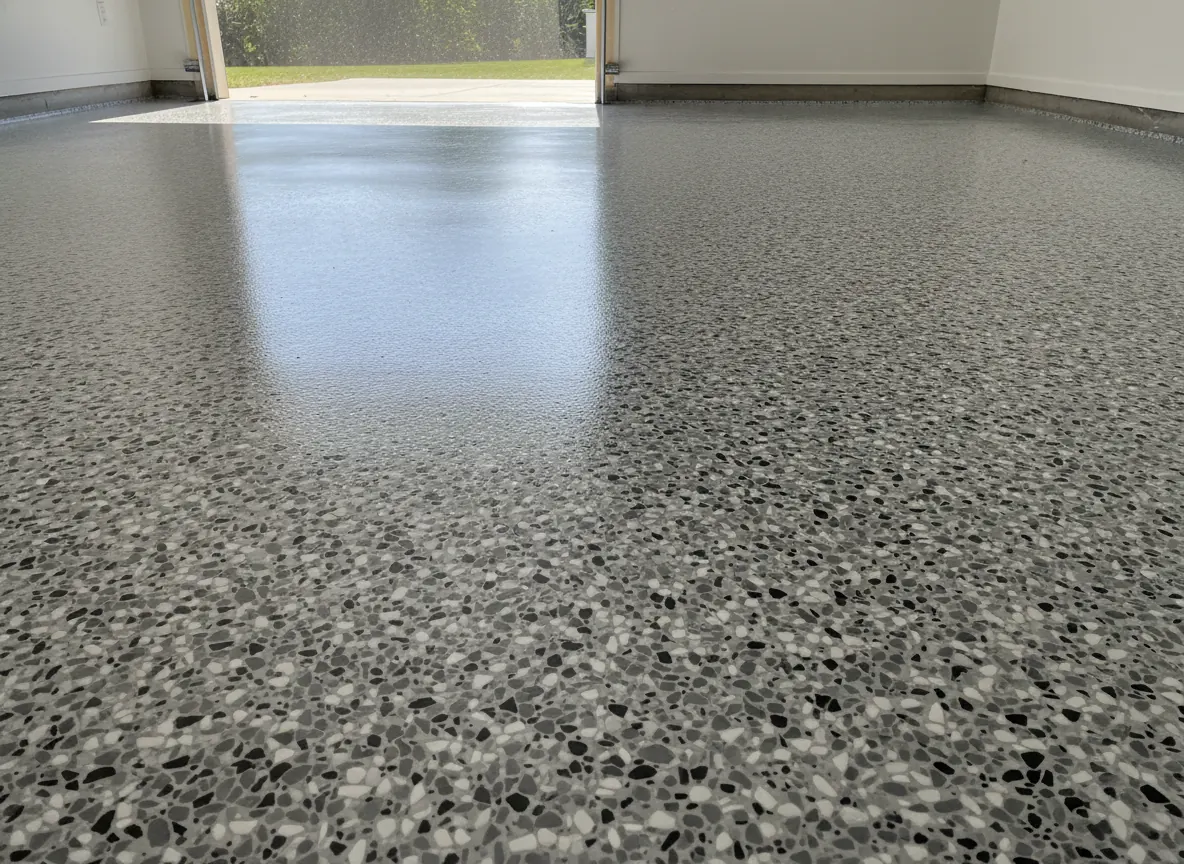
Does flake texture make a floor less slippery?
Yes, in most cases. In a flake system, colored vinyl chips are broadcast into the wet base coat, and the topcoat seals over them. The edges of the chips create a subtle, uneven surface even after the clear coat goes on. That texture is one reason flake floors are the most popular choice for residential garages, alongside how well they hide dirt.
How much grip you get depends on how thick the topcoat is. A heavy topcoat can smooth over the chips and make the floor glossier and slicker. A thinner topcoat keeps more texture. If traction is a priority, tell your installer, and ask about adding anti-slip grit to the topcoat as well. Our flake garage floor coating page covers the system in more detail, and flake vs metallic vs solid color compares the looks side by side.
Which garage floor finishes are most and least slippery?
As a general rule, from most grip to least, when wet and without added grit:
- Full-broadcast flake with a textured topcoat: the most built-in grip.
- Flake with a standard topcoat: some texture, generally fine for a garage.
- Solid-color epoxy with an anti-slip additive: good grip, plain look.
- Smooth solid-color epoxy or polyaspartic: slick when wet.
- Metallic epoxy: usually the smoothest, glossiest finish, so it benefits most from an anti-slip topcoat if it goes in a working garage.
Shop floors are their own case. A commercial floor with fluids on the ground often calls for heavier texture and safety striping; see our commercial and shop floor epoxy page.
How to keep a coated garage floor from getting slippery
- Ask for anti-slip grit in the topcoat, especially near doors and steps.
- Put a containment mat under each car in winter to catch snowmelt and salt brine.
- Use a squeegee to push standing water out the door after storms.
- Wipe up oil, coolant and other fluids right away. These are slick on any surface.
- Clean with a product your installer recommends. Some cleaners leave a residue that makes floors slicker.
- Add a mat at the house entry door, where people step off wet.
The bottom line
A smooth, glossy coated floor can be slippery when it is wet, and in a place with nearly 48 inches of rain a year and salty winter slush, that is worth planning for. A flake system, an anti-slip additive in the topcoat, or both, solve it for most homes without giving up the clean look.
To see what a textured flake or polyaspartic floor typically costs for a one-, two- or three-car garage, check our garage floor epoxy cost guide (typical ranges, estimates only). When you are ready, get a free quote and ask the installer to bring texture samples so you can feel the difference.