
If you have ever seen a garage floor coating peeling in sheets where the car tires sit, you have seen what happens when the prep goes wrong. Coatings do not stick to concrete by magic. They need a clean, sound, slightly rough surface to grab, and getting there is the most important part of the job.
So do you have to grind a garage floor before epoxy? For a coating you expect to last, grinding (or another mechanical profiling method such as shot blasting) is the standard approach. Acid etching is the main alternative, and it is mostly found in DIY kits. Here is how the two compare, what to do about cracks, and why moisture testing matters on Tri-State slabs.
Why concrete prep matters so much
Most garage floors have a smooth, dense top layer from when the concrete was troweled. Over the years it also picks up oil, tire residue, sealers, old paint and salt. A coating applied over that surface has little to bond to. It may look fine for a few months, then let go under hot tires, winter slush or a dropped tool.
Prep has three goals:
- Remove contaminants and weak surface material, including old coatings, sealers and oil.
- Create a surface profile, a texture a bit like medium sandpaper, that the coating can grip.
- Repair defects such as cracks, chips, spalling and pitting so the finished floor is smooth and sound.
Diamond grinding vs acid etching
Diamond grinding
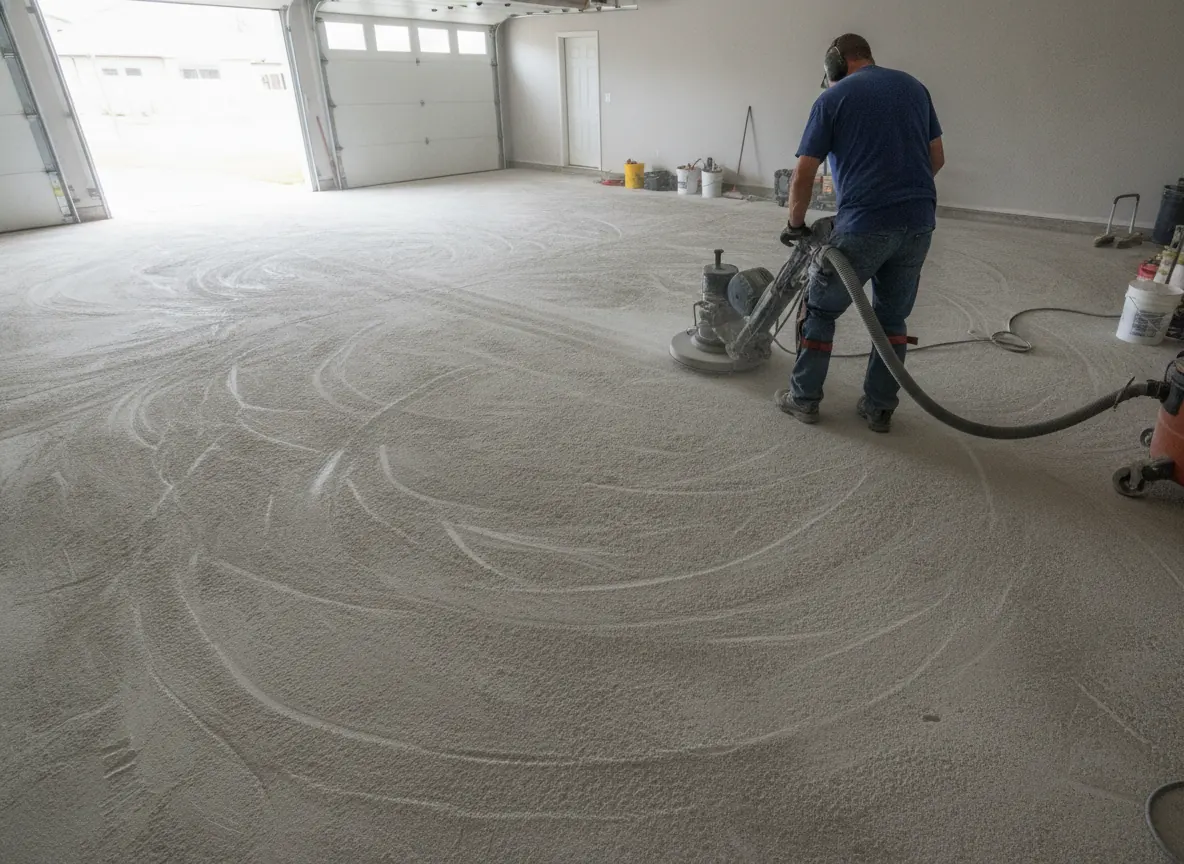
A diamond grinder is a heavy floor machine with rotating diamond-studded discs. It removes the top skin of the concrete along with sealers, glue, paint and stains, leaving an open, even profile. Professional rigs are typically connected to an industrial vacuum to control dust. Edges and corners are finished with a hand grinder.
The main advantages are consistency and control. Grinding works on sealed or previously coated floors, it removes weak surface material instead of just roughing it up, and it does not add water or chemicals to the slab. That is why most professional installers, and many coating manufacturers, specify grinding for high-performance epoxy and polyaspartic systems.
Acid etching
Acid etching uses a diluted acid solution (or a milder etching product in many DIY kits) scrubbed into the concrete, then neutralized and rinsed. It can open up the surface of clean, bare, unsealed concrete. Its limits are real, though:
- It does not remove sealers, old coatings or deep oil stains; the acid just sits on top of them.
- Results can be uneven, especially on old or patched slabs.
- It puts a lot of water into the slab, which must dry completely before coating.
- It involves handling chemicals, so ventilation, protective gear and the product's safety directions matter.
Acid etching can work for a thin DIY coating on a clean floor. For a thicker, professional-grade system, grinding is the safer bet. If you are on the fence about doing it yourself, read DIY epoxy kits vs professional installation.
Crack and chip repair before coating
Older slabs almost always need some repair. Evansville's median home was built in 1961, according to Census data, and much of the city's housing dates to the post-war decades. A garage slab that has been through more than sixty Indiana winters, with freezing and thawing and years of road salt, often has cracks, pitting and chipped control joints.
A coating is a thin film, so it does not reliably fill cracks. Instead, installers typically:
- Grind or chase the crack open so the repair material can bond.
- Vacuum out dust and debris.
- Fill it with a repair material made for concrete under coatings, such as an epoxy or polyurea crack filler.
- Grind the patch flush with the floor.
Small crack and chip patching typically adds about $25 to $250 to a job. A badly damaged slab may need resurfacing first, which typically runs about $3 to $5 per square foot (estimates only). See our concrete floor prep and crack repair page for more on what is involved.
Moisture testing: the step people skip
Moisture moving up through a slab is one of the most common reasons coatings bubble or lift. Concrete is porous, and water vapor from the ground below can push against a coating from underneath. Garages and basements in river country deserve extra attention here. In April 2025 the Ohio River crested just under 48 feet at Evansville, its 7th-highest on record, and flooding surrounded homes in parts of northeast Henderson County.
Common ways to check for moisture include:
- Plastic sheet test: tape a square of clear plastic to the slab and check it after a day or so. Condensation under the sheet or darkened concrete suggests moisture is coming through. It is a simple screening test, not a precise measurement.
- Professional moisture tests: installers may use a meter or a standardized test method to measure moisture more precisely, then compare it to the coating manufacturer's limits.
If moisture is high, a moisture-mitigating primer or barrier coat can be used under the main system. It typically adds about $1 per square foot (an estimate). This comes up often on basement floors; see our basement floor epoxy page.
What a good prep day looks like
On a typical professional job, prep includes moving out what is left in the garage, degreasing heavy oil spots, diamond grinding the full floor and edges, vacuuming thoroughly, repairing cracks and chips, grinding the repairs flush, and a final vacuum before the first coat. You can see the full sequence on our process page, and our post on how long garage floor epoxy takes to dry covers what happens after the coating goes down.When you get quotes, ask each installer how they prep the floor, whether they test for moisture, and how they handle cracks. The answers tell you a lot about how long the floor will last.
The bottom line
You do not strictly have to grind before every coating, but for a durable epoxy or polyaspartic garage floor it is the standard, and skipping it is one of the most common reasons coatings fail early. Acid etching can work on clean, bare concrete for lighter-duty DIY coatings. Either way, repair cracks and check for moisture first.
Prep is usually built into a professional price. See typical installed ranges on our garage floor epoxy cost guide, or get a free quote and have an installer look at the condition of your slab.
Quick answers
Can I just pressure wash my garage floor and apply epoxy?
Pressure washing removes loose dirt, but it does not open up the surface of the concrete or remove the smooth, hard top layer that coatings struggle to grip. On its own it is rarely enough preparation for a durable coating. Most professional systems call for diamond grinding or another mechanical profile, then thorough vacuuming, before any coating goes down.
Does garage floor epoxy fill cracks?
Not reliably. A coating is a thin film, so it will usually follow the shape of a crack rather than fill it, and the crack can show through or reflect up later. Cracks and chips are normally cleaned out and filled with a repair material made for the job before coating. Patching typically runs about $25 to $250, depending on how much repair is needed.